OPEN AUSTRALIA DAY 10-4 TUES –SAT 9AM–5PM SUN 10AM–4PM SHOP ONLINE 24/7 | CAR PARK OPEN 10AM–3PM botanicalcreations.com.au
Aussie Spirit
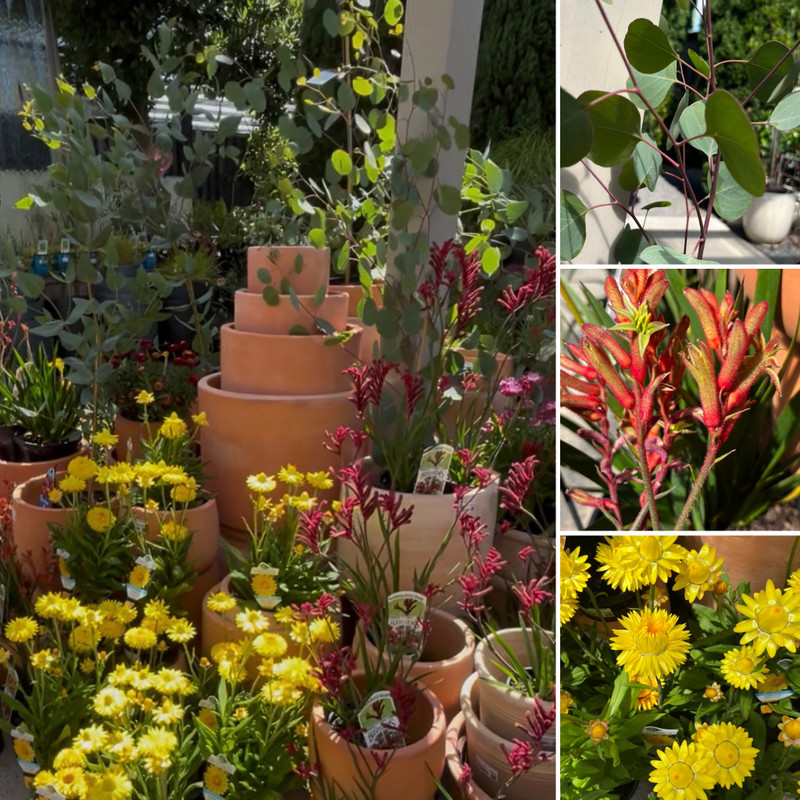
Create a haven of native plants bursting with colour for you and our native birds!
One of the few Eucalyptus you can plant in a small garden An evergreen medium tree with attractive scaly bark and rounded foliage. An excellent ornamental, great as a shade or shelter tree and for general garden planting. The flowers are used in honey production and attract nectar feeding birds. Juvenile foliage is oval in shape and grey-green in colour whilst the mature, adult leaves are more ovate A low maintenance plant that requires little care but if you want to maintain the juvenile foliage cut it hard for more foliage production. Its great as a filler in cut flowers. FULL SUN
Height 16m x 5M at maturity
ANIGOZANTHOS 'BUSH BALLAD' Anigozanthos ‘Bush Ballad’ is a compact, clumping kangaroo paw valued for its rich flower colour and tidy growth habit. It features strong, upright stems bearing velvety, tubular flowers in deep red tones with darker accents, held above narrow, strap-like green foliage. Flowering occurs mainly from spring through summer, with repeat blooms
It performs well in garden beds, borders, and large containers, and is well suited to coastal and warm-climate gardens. Avoid heavy, waterlogged soils, as good drainage is essential.
H 40–60 x 40–50 cm wide, forming a neat, rounded clump.
Low maintenance and hardy once established, this kangaroo paw is also attractive to birds and makes an excellent cut flower, adding bold Australian character to the landscape.
Brachteantha ‘Mohave Yellow’ is a bright, sun-loving ornamental prized for its long-lasting, papery flowers and tough, drought-tolerant nature. This compact, bushy plant produces an abundance of vivid yellow blooms with contrasting dark centers, held above silvery-green foliage. The flowers retain their color and shape exceptionally well, making them attractive both in the garden and as cut or dried flowers.
Blooming over a long season—from late spring through summer and often into autumn—‘Mohave Yellow’ is well suited to borders, containers, and mass plantings, especially in warm, dry climates. Low-maintenance and heat tolerant, this variety performs reliably with minimal watering once established, adding cheerful color and texture to landscapes and floral arrangements alike. H 40x40cm FULL SUN Bold Aussie Colour Filled with Inspiration! - Carolyn
Tom's Indoor Combo of the Week! Alocasia macrorrhiza in Moroccan Ears Pot
GIFTS-2-GO! From $59.99 Anthurium Anthuriums need a high light but not direct sunlight. - Water your anthurium thoroughly, but allow it to dry slightly between waterings. - Use wetting agent in water if peat/ soil starts to contract from the edge of the pot - Do not over-water the anthuriums as it may cause root damage and yellowing of the leaves. - Fertilize the Anthurium plant about every other month with Searles Flourish. - Avoid draughts and strong temperature fluctuations. - In winter, anthurium plants need a 6 week rest period at a 15\u00B0C with little water. This allows the plant to flower profusely again in the following season. - Remove dead foliage and faded or brown flowers as they occur. - Repot plant when foliage is so dense you can barely see the soil. -Flowers will become larger as the plant size increases.
Northland - A blueberry with particularly large fruit, starting to ripen as early as christmas and cropping through until late summer. They require chill, and leaves turn a lovely crimson colour in Autumn. Can be self fertile but yield will be better when pollinated by another variety.
Sunshine Blue - A evergreen shrub that grows up to 1.5m bearing mid-sized fruit. Suitable for warmer climates. This semi-dwarf, versatile semi-deciduous blueberry features showy hot pink flowers that fade to white in spring, yielding large crops of delicious berries. This variety is self-fertile so another plant nearby is not required, making it perfect for smaller gardens. Blueberry Sunshine Blue is frost tolerant and will reliably produce fruit making it well suited to all parts of Australia.
Rory's Hardware Pick of the Week
☀️ CHECK YOUR FRUIT TREES FOR CODLING MOTH ☀️
Codling moth is tricky to manage but it gets worse every year if not managed. Moths lay eggs and the catapillar (Larvae)burrow in and eat your fruit. if the fruit drops to the ground then the cycle continues. Heres what to do. NOW • SUMMER as fruit appears put Fruit Protection Sleeve around the fruit on to protect them from entering. Catch boys in a sherry trap (a jar filled with sherry and hung in a tree) the girls are about to lay eggs • Remove loose bark and leaf debris from the tree, to reduce hiding places for cocoons. • Have a wide range of flowering plants in your garden to attract beneficial insects and insectivorous birds. • Use sticky traps or trunk bands and/or main branches – this will trap female moths as they try to climb up to the fruit to lay their eggs • Inspect the trees every few days, collect any fruit you find with small holes and destroy it by placing it in a sealed, black plastic bag in the sun before placing it in the bin . Or feed it to the chooks! Once a month from AUGUST • Use Tomato & Veg Dust at the right time (ie: when the eggs are laid but the fruit not infested) • SPRING TO AUTUMN Attach bands of corrugated cardboard around tree trunks – the larvae like to pupate in the shelter the corrugations provide. Remove them every 3 weeks and place them in a black plastic bag in the sun to destroy the pupae. • Hang a commercially available pheromone lure and trap in the tree – this attracts the moths and they get stuck on the sticky inner surface. • Make your own traps out of old plastic bottles with 2 holes cut in the sides about 2 cm above the base and add a 50:50 mix of molasses and water. Check them every few weeks.